
What Is Agentic Claims Processing for Distributor Settlements?
Software agents that take a claim through ingest, validation and credit-note drafting, pausing at approval gates. What's real, and what must stay human.
In short
Agentic claims processing means software agents that carry a claim through its lifecycle — ingesting it, validating it against scheme terms, requesting missing documents, computing the settlement and drafting the credit note — pausing for human approval at defined gates, instead of waiting for a human to drive every step. The design question that matters is gate placement: settlement release and credit-note issuance should never be autonomous.
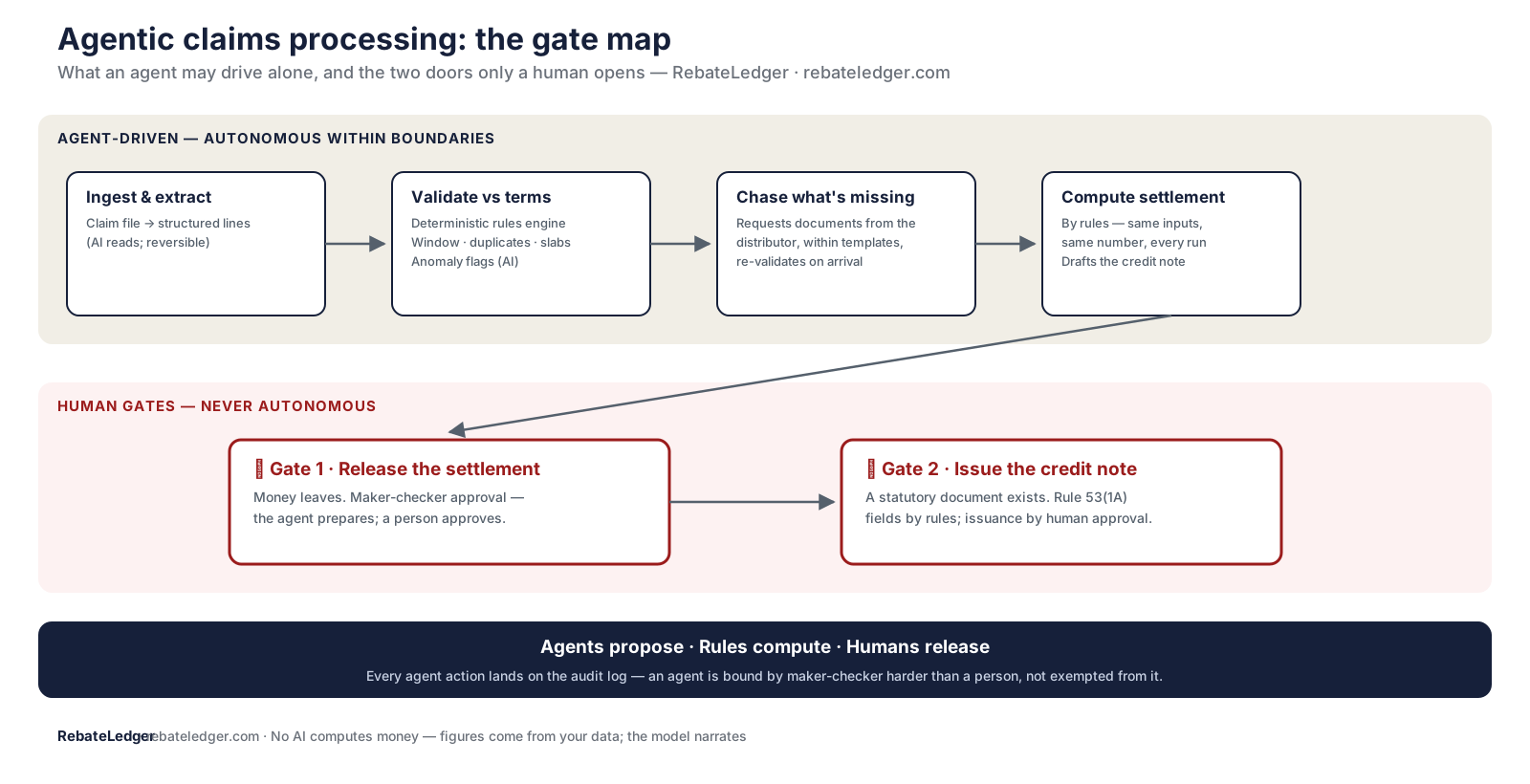
"Agentic AI" is arriving in finance software marketing ahead of finance software reality. This article defines agentic claims processing precisely, separates what exists today from what's genuinely next, and names the design question that will decide whether it's safe: where the human approval gates sit.
The definition
Agentic claims processing = software agents that carry a claim through its lifecycle — ingest → validate → chase missing documents → compute settlement → draft the credit note — pausing at defined human gates, instead of waiting for a person to drive each step.
Agentic vs automated: who drives between the steps
A workflow executes predefined steps when a human (or schedule) triggers them. An agent is goal-directed within boundaries: told "get this claim decision-ready", it sequences the work itself — notices the claim file lacks the scheme reference, requests it from the distributor, re-runs validation when the corrected file lands, flags the anomaly it can't explain, and escalates with a summary. Each individual capability already exists in mature claims platforms; the agentic part is the orchestration between them being goal-directed rather than human-driven.
What exists today vs what's emerging
Available now (in RebateLedger and category-wide): rules-based claim-to-scheme matching, anomaly detection, document extraction, GST pre-validation, computed settlements behind maker-checker approval. Emerging: the autonomous chase-and-retry loop — agents that own the in-between: following up documents, re-validating, composing the escalation. In adjacent territory, accounts-receivable vendors already market agentic deductions management — nobody yet owns the distributor-settlement variant, which is precisely why a sober definition matters before the marketing arrives.
The design question: gate placement
The value of an agent is autonomy; the safety of a settlement system is control. The resolution is explicit gates:
| Action | Autonomous? | Why |
|---|---|---|
| Ingest, extract, structure a claim | Yes | Reversible; errors surface at validation |
| Validate against scheme terms | Yes — by rules | Deterministic and re-performable |
| Request missing documents | Yes, within templates | Bounded, logged, distributor-visible |
| Compute the settlement | Yes — by rules | Same inputs, same number, every run |
| Release the settlement | Never | Money leaves — human approves |
| Issue the credit note | Never | A statutory document exists — human approves |
The two "never" rows are the same maker-checker discipline that governs human settlement today — an agent should be bound by it harder, not exempted from it. And beneath the gates sits the architecture rule worth keeping regardless of how agentic the category gets: agents propose, rules compute, humans release — in RebateLedger's terms, no AI computes money; figures come from your data, the model narrates.
A sober two-to-three-year outlook
Expect the chase-and-retry loop to become standard first (it's bounded and low-risk), agent-drafted escalation summaries second, and cross-claim pattern work — "these five distributors' claims all misread the same circular clause" — third. Expect nobody credible to remove the release gates, because auditors, GST law and common sense all point the same way. The buyer's question to any vendor saying "agentic": show me the gate map — which actions the agent takes alone, which it prepares for approval, and what the audit log records for each. A vendor with a real answer draws you the table above; a vendor without one is selling the word.
Automation only helps once the settlement process it is automating is defined. The settlement factsheet for rebates and claims sets out that baseline.
Frequently asked questions
How is agentic different from ordinary automation?
Ordinary automation executes predefined steps when triggered — a workflow. An agentic system is goal-directed within boundaries — given 'get this claim to a decision-ready state', it chooses the next action, requests what is missing, retries what failed, and escalates what it cannot resolve. The difference is who drives between the steps, not the intelligence of any single step.
What should never be autonomous in claims settlement?
Two actions: releasing a settlement (money leaves) and issuing the credit note (a statutory document exists). Both are human approval gates by design — an agent may prepare, compute and draft, but a person approves. The same maker-checker logic that governs human settlement today should bind agents even harder.
Is agentic claims processing available today?
The building blocks are — automated validation, anomaly detection, document extraction, computed settlements behind approval gates. What is genuinely emerging is the goal-directed orchestration between them. In accounts-receivable deductions, vendors like HighRadius already market agentic deduction handling; the distributor-settlement variant of that pattern is where the category is heading over the next two to three years.
How does RebateLedger relate to this?
RebateLedger runs the lifecycle with deterministic rules plus AI assistance — auto-matching, anomaly flags, GST pre-validation, plain-language explanation — with maker-checker approval on settlement and credit-note actions. The standing rule is that no AI computes money; figures are computed from your data and the model narrates. That is the architecture agents will drive too: agents propose, rules compute, humans release.
See RebateLedger on your own claims data
A 30-minute walkthrough tailored to how your channel actually settles claims.