
Rebate Scheme Examples in India: Why Global Examples Do Not Fit
Global rebate examples describe annual negotiated contracts and consumer mail-in offers. Indian trade schemes work differently. What changes, and why.
In short
Global rebate examples usually describe an annual volume rebate negotiated into a contract, or a consumer mail-in offer. Indian trade schemes are different in four ways: they run monthly or quarterly rather than annually, they are published as a circular rather than negotiated individually, they run across many partners at once, and they settle by credit note after the period closes.
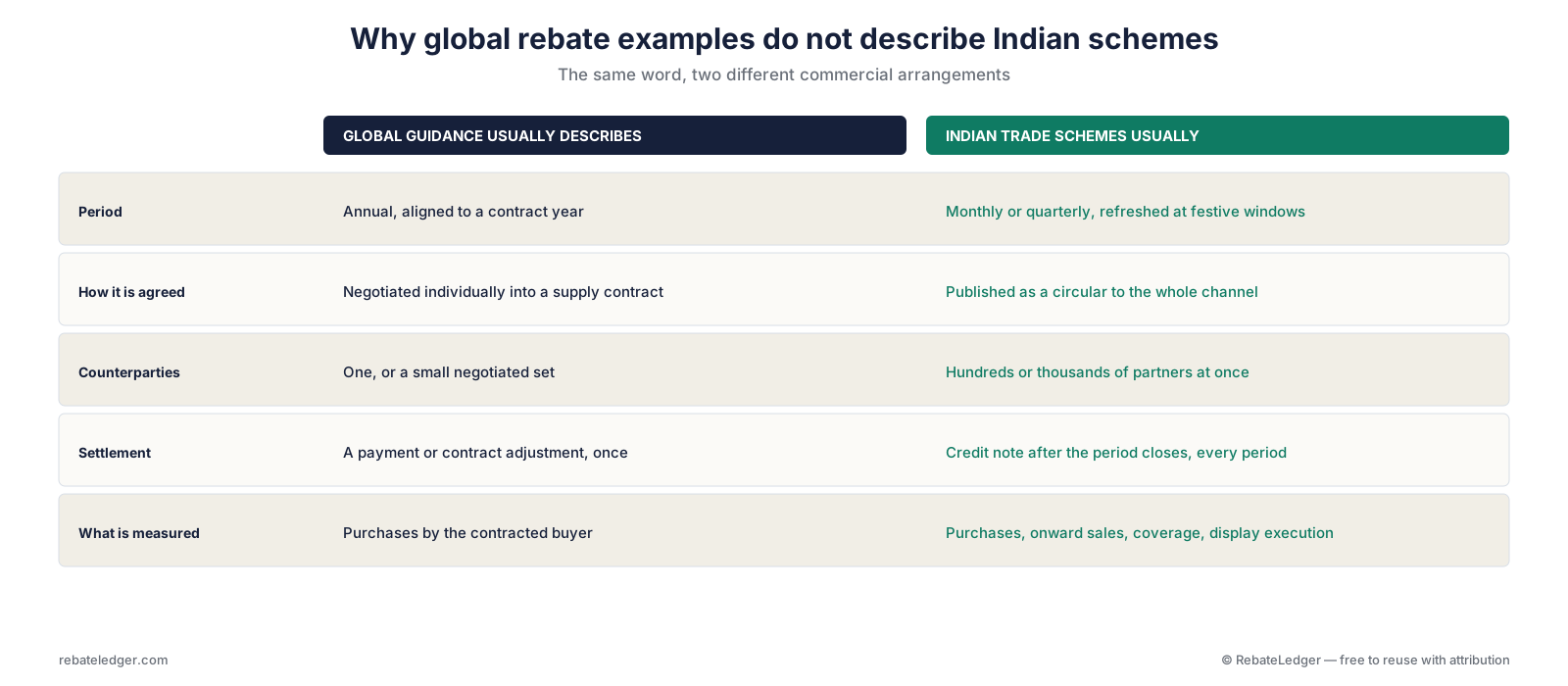
If you searched for rebate programme examples and found annual volume rebates negotiated into supply contracts, or consumer mail-in offers, you found guidance written for a different market. Almost none of it transfers to how trade schemes actually run in India. This page explains what is different and why, so you can read global material without being misled by it.
This is an orientation page, not a catalogue. For the structural types themselves — slab, QPS, target, display, tour, gift and secondary — the full taxonomy with worked examples is in types of trade schemes in India. What follows is the layer above that: why the shape of the arrangement differs here, and what that changes in practice.
Throughout, "rebate" means a trade or channel rebate paid to a business partner, not the personal income-tax rebate that dominates the term in India. "Scheme" means a trade or distributor scheme, not a government scheme.
The four differences that matter
Global rebate guidance and Indian trade-scheme practice diverge on four structural points. None of them is a matter of sophistication — they are different commercial arrangements that happen to share a word.
| What global examples usually describe | What Indian trade schemes usually do | |
|---|---|---|
| Period | Annual, aligned to a contract year | Monthly or quarterly, refreshed at festive windows |
| How it is agreed | Negotiated individually into a supply contract | Published as a circular to many partners at once |
| Counterparty count | One, or a small negotiated set | Often hundreds or thousands of partners simultaneously |
| Settlement | Payment or contract-level adjustment, once | Credit note after the period closes, every period |
| What is measured | Purchases by the contracted buyer | Purchases, onward sales, outlet coverage, display execution |
Read down the right-hand column and a different operational problem appears. An annual rebate negotiated with one buyer is a contract-management task. A monthly scheme published to a thousand partners, each raising a claim with evidence, is a settlement-throughput task — and that is the task Indian channel finance teams actually have.
Why the period length changes everything
A scheme that runs for a month rather than a year does not simply repeat the same work twelve times. It changes the nature of the work.
With an annual arrangement, the base is large, the entitlement is calculated once, and there is time to reconcile before anything is paid. With a monthly scheme, the base is small enough that a handful of disputed invoices can move a partner across a slab boundary, the calculation runs before the previous period is fully reconciled, and claims from three periods can be open at the same time. Ageing becomes a real problem rather than a theoretical one, which is why reducing distributor claim turnaround time is a live concern here and rarely mentioned in global material.
The shorter cycle also means schemes overlap. A partner is frequently being measured against a slab scheme, a growth incentive and a display scheme in the same month, on overlapping transactions. That is normal and manageable, but only where the terms say which takes precedence and whether payouts stack — otherwise the same transaction gets claimed twice under different names and the argument surfaces at settlement.
Why a circular is not a contract
The second difference is easy to underrate. In a negotiated rebate, ambiguous wording is resolved between two parties who both remember the negotiation. In a scheme circular issued to the whole channel, the same ambiguity is resolved separately with every partner who reads it differently — and they will not all read it the same way.
That makes circular wording disproportionately consequential. A slab table that does not state whether the achieved rate applies to the whole base or only to the value inside each tier will pay two different amounts depending on who computes it. A period that says "September" without stating whether it runs on invoice date or dispatch date will be claimed on whichever basis suits each partner. Neither is a tax question or a systems question; both are drafting questions, and both are cheap to fix before the period and expensive after it.
The practical discipline is to write the circular so a stranger could compute the payout from it without asking a question. Supplier rebate agreements sets out the clauses that make that possible, and modelling trade scheme cost before launch covers testing what the wording will actually cost before it goes out.
What is measured is broader here
Global volume rebates measure one thing: how much the counterparty bought. Indian trade schemes routinely measure things that are not on your own invoices at all.
- Onward sales. A secondary scheme settles on what the partner sold to retailers, not what they bought from you. It rewards stock that moved rather than stock loaded into a godown, at the cost of depending on partner data you do not control. This data dependency is the defining operational constraint, covered in secondary scheme settlement and receiving secondary sales data.
- Outlet coverage. How many outlets were billed in the period, rather than how much value went to them.
- Execution. Whether an agreed display was actually in place, evidenced by dated photographs.
- Liquidation. Whether ageing stock cleared, which is measured on movement out rather than purchases in.
Each of these requires evidence that a purchase-based rebate never needs, and each therefore has an evidence-quality failure mode of its own. That is why the Indian claim conversation is dominated by documentation in a way the global rebate conversation is not — see documents required for a distributor scheme claim.
What changes by sector
The structural types repeat across industries, but the emphasis shifts enough that a scheme design borrowed from another sector usually misfires.
FMCG runs the highest frequency and the largest partner counts — quantity purchase schemes on cases, secondary schemes on retailer offtake, display schemes on execution, all refreshed monthly and heavily at festive windows. See FMCG trade schemes explained.
Pharma leans on bonus quantity rather than percentage rates, and carries expiry and breakage handling as a permanent part of the settlement rather than an exception. Stockist margins are structured through published price points.
Building materials and paints add influencer programmes — painters, contractors and applicators who specify the product but do not buy it through the normal channel — alongside dealer schemes. See painter and contractor loyalty programmes.
Agri inputs work in seasonal cycles with pre-booking ahead of the season and liquidation support after it, so the scheme calendar follows the crop rather than the financial year.
Consumer electronics leans on price protection and stock compensation, because rapid list-price movement leaves partners holding stock bought above the current price. See price protection in consumer electronics.
Apparel and general merchandise lean on markdown support and end-of-season adjustments rather than volume rates.
None of this is prescriptive — brands in every sector run schemes from outside their sector's typical mix. It is descriptive of where the weight usually sits.
What every scheme needs, regardless of type
Whatever shape a scheme takes, the same nine things decide whether it settles by calculation or by argument: eligibility, period, base, rate, cap, evidence, claim deadline, returns treatment and settlement route.
The two most often left unstated are the last two. Returns treatment — whether goods returned after a claim was settled reduce the entitlement — is the source of a large share of retrospective disputes, and is covered in returns, reversals and cancellations on channel claims. Settlement route determines what document the partner receives and what it means on their side, which is where the tax questions begin.
Those tax questions are real and they are not answered here. Where GST or withholding arises on a scheme payout, the questions and where each is discussed are set out in the tax checklist for dealer and distributor incentive programmes. This article states no tax position; confirm the treatment for your arrangement with a qualified professional.
Running several schemes concurrently across a large partner base is where spreadsheets stop coping — not because the arithmetic is hard, but because the evidence, the versions and the overlaps multiply. That operational threshold is covered in migrating rebate claims off spreadsheets, and RebateLedger exists to run exactly this settlement cycle at that scale.
General information, not advice. This article describes common commercial practice in Indian channel schemes. It states no tax or accounting position. Any figures shown are illustrative. Confirm the treatment of any specific arrangement with a qualified chartered accountant or cost accountant.
Frequently asked questions
Why do global rebate examples not describe Indian trade schemes?
Because they describe a different arrangement. Most global material covers an annual volume rebate negotiated into a supply contract with one counterparty, or a consumer mail-in rebate. Indian trade schemes typically run for a month or a quarter, are published as a circular to many partners at once, and settle by credit note after the period closes. The structure, the frequency and the settlement route all differ.
How often do Indian trade schemes run?
Commonly monthly or quarterly rather than annually, and often refreshed at festive windows. The shorter cycle is the single biggest structural difference from the annual contracts global guidance describes, because it means a partner may be measured against several overlapping schemes at once and the settlement workload recurs every period rather than once a year.
How is an Indian trade scheme usually communicated?
Through a scheme circular issued to the channel, rather than a clause negotiated individually into each partner's contract. The circular states the period, the qualifying base, the rate and the evidence required. Because it goes to many partners at once, its wording carries more weight than in a negotiated arrangement — everyone is measured against the same text.
How are Indian trade schemes settled?
Most commonly by credit note issued after the scheme period closes and the claim is validated, rather than by cash payment. Which type of credit note is used has consequences that are covered in financial vs tax credit notes under GST. Confirm the treatment for your arrangement with a qualified professional.
Can more than one scheme apply to the same sale?
Yes, and it is common. A single purchase can qualify under a slab scheme, a growth incentive and a display scheme at the same time. This is manageable when the scheme terms state precedence and whether payouts stack, and becomes a dispute when they do not. See scheme conflicts on the same transaction.
What is the difference between a primary and a secondary scheme?
A primary scheme is measured on what the partner bought from you, which is visible on your own invoices. A secondary scheme is measured on what the partner sold onward, which is visible only in their sales data. The second rewards real movement but depends on receiving partner data, as set out in secondary scheme settlement.
Do trade schemes differ by sector in India?
The mix shifts considerably. FMCG runs high-frequency quantity and secondary schemes across very large partner counts; pharma leans on bonus quantity and expiry handling; building materials adds contractor and applicator programmes; agri inputs work in seasonal pre-booking cycles; electronics leans on price protection. The underlying structures repeat, but the emphasis does not.
What does every trade scheme need to settle cleanly?
Nine things stated before the period starts — eligibility, period, base, rate, cap, evidence, claim deadline, returns treatment and settlement route. A scheme missing any of them will settle eventually, but it will settle by negotiation rather than by calculation. The clauses that make it computable are set out in supplier rebate agreements.
See RebateLedger on your own claims data
A 30-minute walkthrough tailored to how your channel actually settles claims.