
Ship and Debit: How Special Pricing Agreements Actually Work
Ship and debit — how a special pricing agreement authorises a lower price, how the claimback is computed, and how it differs from price protection.
In short
Ship and debit lets a distributor stock goods at list price but sell them to a named end customer at a lower authorised price, then debit the supplier for the difference. The authorisation — a special pricing agreement — comes first and names the customer, the price, the quantity and the window. The claim is validated against it, which is what separates it from a discount.
Ship and debit lets a distributor stock at one price and sell at another — buying goods at list, shipping them to a named end customer at a lower price the supplier authorised in advance, and then debiting the supplier for the difference.
The authorisation comes first. That is the whole design, and it is what separates this from a discount: the supplier decided, before the sale, that this distributor could sell to this customer at this price for this quantity within this window. The claim that follows is checked against that decision rather than simply accepted.
The vocabulary
Four terms, one mechanism, and they get used loosely.
- Special pricing agreement (SPA) — the authorisation itself. Names the customer, the price, usually a quantity cap and a date window.
- Ship and debit — the mechanism: ship at the authorised price, debit the supplier the difference.
- Claimback — the claim raised to recover that difference. The money side.
- Deviated price — the authorised price itself, so called because it deviates from the standard price the distributor would otherwise sell at.
The terminology is strongest in electronics, semiconductor and industrial distribution, where a distributor may hold stock for months without knowing which end customer will buy it or at what negotiated price.
Why the mechanism exists at all
A distributor's problem is that they have to buy stock before they know who will buy it.
If a supplier wants to win a large end customer on price, the distributor holding the stock cannot simply absorb the discount — they bought at list. And the supplier cannot easily pre-discount the inventory, because when the goods were shipped into the channel nobody knew which units would end up in that deal.
Ship and debit resolves this by separating the two decisions. Stock moves into the channel at normal terms. The pricing decision for a specific deal is made later, in writing, and the money follows the sale rather than the shipment.
That is also why the authorisation has to be so specific. A blanket "sell this customer cheaper" would be impossible to reconcile; an SPA that names quantity and dates can be checked against every claim raised under it.
The claim, worked
Take one unit at a list price of ₹1,000. All figures illustrative.
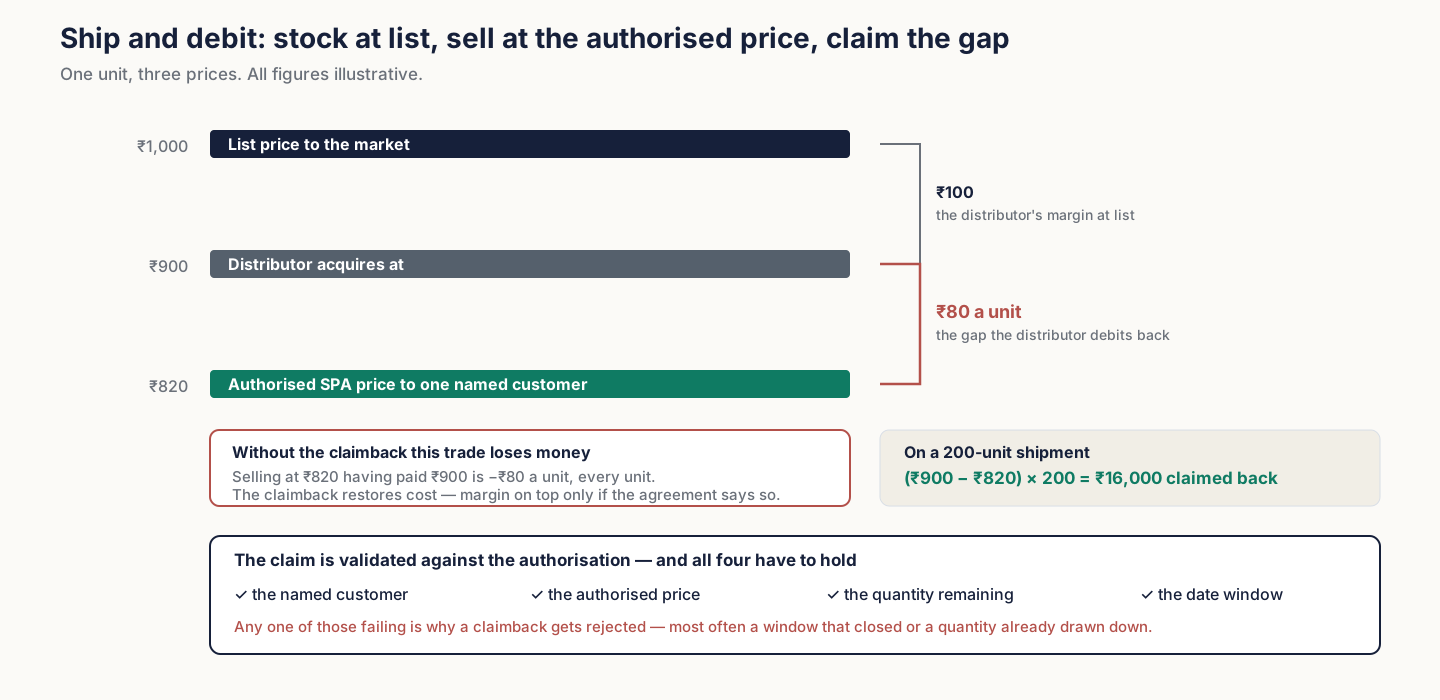
The distributor acquires at ₹900, so at list they would earn ₹100. The SPA authorises them to sell to one named customer at ₹820 — 18% off list.
Sell at ₹820 having paid ₹900 and the distributor is ₹80 down on every unit. So they ship at the authorised price and debit the supplier the difference:
(₹900 − ₹820) × 200 units = ₹16,000
One nuance worth pinning down in any agreement: that calculation restores the distributor to cost, not to profit. Whether the claimback also returns their normal margin — making it cost-plus rather than cost — is a commercial term, and agreements genuinely differ. A distributor who assumes cost-plus and signs cost has agreed to do that business at zero margin.
What the claim is validated against
A claimback is not a request; it is an assertion that a specific authorisation covered a specific shipment. Four things have to hold:
- The customer — the end customer on the claim is the one the SPA names. Selling authorised stock to a different buyer, however similar, is not covered.
- The price — the claim is computed at the authorised price, not the price actually negotiated on the day if those have drifted apart.
- The quantity — SPAs are usually capped, and each claim draws the cap down. Claim 200 units against an agreement with 150 remaining and the excess fails.
- The window — the shipment date sits inside the agreement's validity period.
That four-way check is exactly what makes this a chargeback rather than a discount. The distinction between the two main claim types in distribution — validated against an authorisation, versus billed for a difference over a period — is set out in billback vs chargeback, and the vocabulary more broadly in the billbacks, chargebacks and deductions glossary.
Ship and debit vs price protection
These get run together constantly, and the difference is clean once you look at what triggers each.
| Ship and debit | Price protection | |
|---|---|---|
| Triggered by | A sale to an authorised customer | A price cut by the supplier |
| Compensates | The gap on units sold | The loss on stock still held |
| Population | Units shipped under one SPA | Qualifying inventory at the cut-off date |
| Known in advance? | Yes — authorised before the sale | No — the cut happens to you |
| The risk it removes | Losing a deal on price | Holding stock through a price fall |
Both pay a rate difference and both settle after the fact, which is why they are confused. But one is about a deal and the other about inventory, and they are computed on entirely different populations of stock. A distributor can be owed both on the same product in the same month, for different units.
How the inventory side works is covered in price protection in sales.
Where claimbacks fail
Rejections cluster around the same few causes, and none of them is about whether the sale was real.
The window closed. Goods shipped a few days after the agreement lapsed. The commercial intent was obvious and the claim still fails, because the authorisation is the thing being checked.
The quantity was already drawn down. Multiple claims against one SPA, and nobody was tracking the running balance. The last claim in is the one rejected, which is often not the one that caused the overage.
The price drifted. The deal was renegotiated after the SPA was issued and the paperwork never caught up, so the claim and the authorisation state different prices.
The customer does not match. A group buying entity, a subsidiary, a different ship-to on the same account — anything where the named customer on the authorisation is not literally the buyer on the invoice.
All four are reconciliation failures rather than commercial ones, which is what makes them frustrating: the business was won, the goods shipped, and the money is lost to paperwork. What happens after a rejection is covered in the chargeback dispute process, and the end-to-end movement of a claim in the chargeback process.
What this looks like in Indian distribution
The mechanism is universal; the vocabulary is not. "Ship and debit" and "SPA" are the terms in US and global electronics and industrial distribution, and they are much less common on an Indian scheme circular.
The same economics show up here under different names. A CFA or stockist selling at a contracted institutional or tender price rather than list, then recovering the difference from the company, is running the same arrangement — authorisation first, deviated price, claim validated against the contract. That flow, including how contract price sits against list or WAC, is worked through in chargebacks in pharma distribution.
If you are reading an agreement rather than a glossary, the useful question is not what the mechanism is called. It is whether the claim will be validated against a prior authorisation — because if it will be, everything in this article applies whatever the paperwork says on the cover.
Frequently asked questions
What is ship and debit?
Ship and debit is an arrangement where a distributor holds stock bought at list price, ships it to a named end customer at a lower price the supplier has authorised in advance, and then debits the supplier for the difference. The distributor does not carry the cost of the discount; the supplier funds it after the sale happens.
What is a special pricing agreement (SPA)?
A special pricing agreement is the authorisation behind a ship-and-debit claim. The supplier agrees in advance that a specific distributor may sell to a specific end customer at a specific price, usually for a capped quantity and a fixed window. It is the document the later claim is validated against.
What is a claimback?
A claimback is the claim a distributor raises to recover the difference between what they paid for the stock and the authorised price they sold it at. It is the money side of ship and debit, and it is only payable where a valid authorisation covered that customer, price, quantity and date.
How is a ship-and-debit claim calculated?
Take the distributor's acquisition cost, subtract the authorised price, and multiply by the units shipped under that authorisation. If a distributor bought at ₹900, the special price is ₹820 and 200 units shipped, the claimback is ₹80 × 200 = ₹16,000. Whether it also restores margin, rather than only cost, depends on the agreement.
What is the difference between ship and debit and price protection?
What triggers them. Ship and debit is triggered by a sale, and compensates the gap on units sold to one authorised customer. Price protection is triggered by a price cut, and compensates stock the partner is already holding when the price falls. One is about a deal, the other about inventory, and they are computed on completely different populations.
Why do ship-and-debit claims get rejected?
Almost always because the claim and the authorisation disagree on one of four things: the customer, the price, the quantity remaining, or the date window. The two most common are a window that closed before the goods shipped and a quantity already drawn down by earlier claims against the same agreement.
Is ship and debit the same as a chargeback?
They describe the same event from different angles. Ship and debit is the pricing mechanism; the chargeback is the claim it produces. In distribution a chargeback is defined by being validated against an authorisation to sell a named customer at an agreed price, which is exactly what a special pricing agreement provides.
See RebateLedger on your own claims data
A 30-minute walkthrough tailored to how your channel actually settles claims.