
Billback in Retail: Sales Billbacks, Customer on Billback and Period Billbacks
Retail and beverage distribution use billback vocabulary nobody defines — sales billback, customer on billback, June billbacks. What each one means.
In short
Retail and beverage distribution attach several labels to the same mechanism. A sales billback is claimed on units sold rather than bought; a customer on billback buys at standard price with the difference recovered afterwards; period billbacks are simply the claims for one month; and a billback allowance is the funding, not the mechanism.
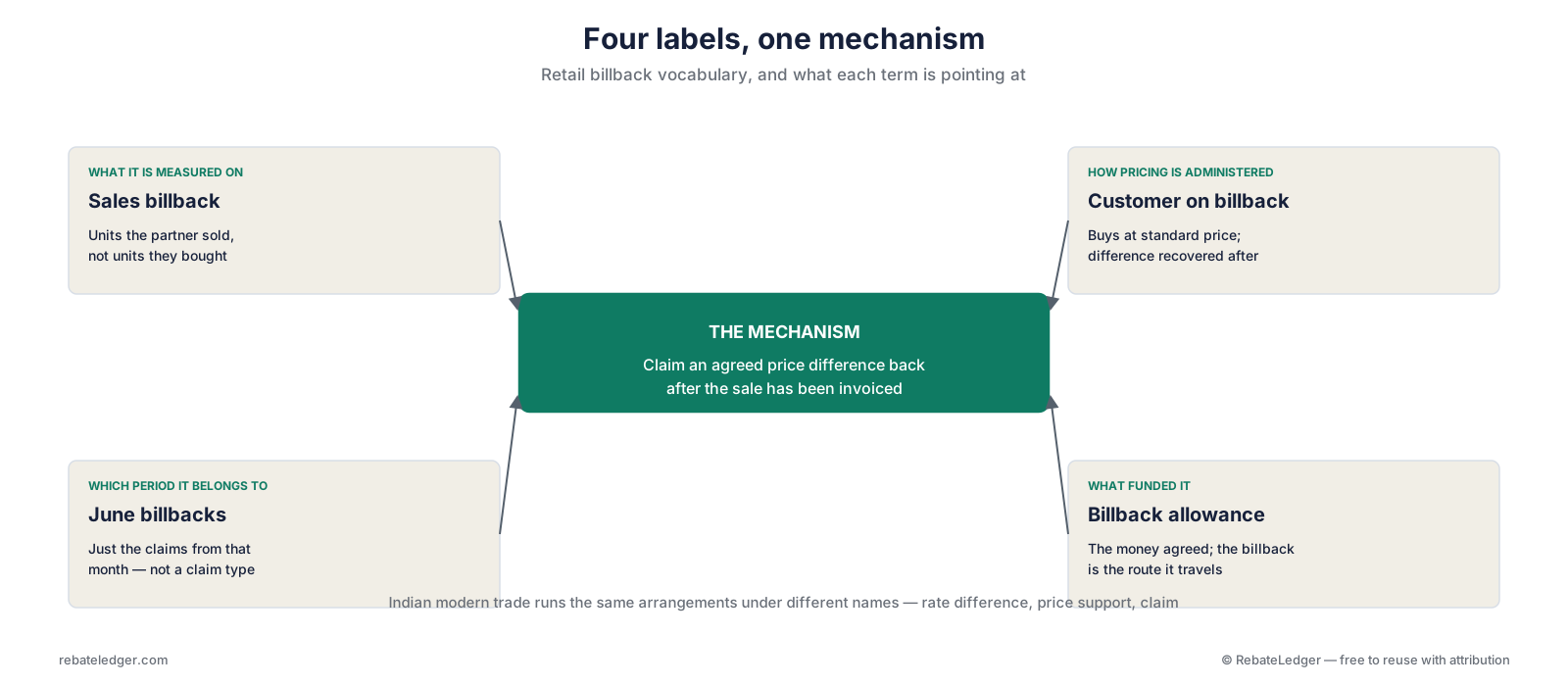
Retail and beverage distribution attach an unusual number of labels to one mechanism, and almost none of them are defined anywhere. Sales billback, customer on billback, June billbacks, billback allowance — these turn up on claim forms and in trading emails as though everyone already knows what they mean.
This page defines each one. The underlying mechanic is the same throughout, and it is covered in what a billback is; what follows is the vocabulary layered on top of it, and what each term is actually drawing attention to.
One note on origin, because it explains the vocabulary's shape. Most of these terms come from grocery, foodservice and beverage distribution in the United States and the United Kingdom, where billbacks have been the standard way of administering deviated pricing for decades. They grew inside individual trading relationships rather than from any standard, which is why several of them overlap.
Sales billback
A sales billback is claimed on the units the partner actually sold, rather than on the units they bought.
The distinction is not pedantic. A distributor may buy 10,000 units in March and sell 6,000 of them under the promotion, with the rest still in the warehouse. A claim measured on purchases and a claim measured on sales produce very different numbers from the same period, and the term "sales billback" exists to remove that ambiguity before it becomes an argument.
It also changes what evidence the claim needs. A purchase-based claim can be validated against your own invoices; a sales-based claim requires the partner's onward sales data, which is why sales billbacks are slower to settle and more often queried. The same measurement split is described in sell-in vs sell-through rebates, and the data requirements in the secondary sales data specification.
Customer on billback
When someone says a customer is on billback, they mean that customer's pricing is administered through the billback mechanism: they buy at the standard price, and an agreed difference is recovered afterwards, rather than the lower price appearing on their invoice.
It is worth stating plainly what this does not mean, because the phrasing sounds ominous to anyone hearing it for the first time. It is not a credit status, a payment problem, or a customer under review. It is a description of how their pricing works, and it is a completely normal arrangement.
Suppliers use it because it keeps list prices intact while funding an exception. A blanket price cut applies to every customer, forever, and is very hard to reverse; a billback funds the lower price only for the agreed customer, on units they can evidence, for an agreed window. That control is the whole point of the arrangement, and it is the same logic described in vendor billback vs rebate.
Period billbacks — "June billbacks"
Nothing about this is specific to June. Retail teams name a billback population by the month it relates to, so "June billbacks" simply means the claims arising from June trading, and "the June file" is the batch being reconciled for that month.
The convention exists because promotions and claims are managed in monthly cycles, and once several months are open at once, people need a way to say which population they mean. It is worth knowing because it reads like a term of art when it is really just a date.
The one place it causes real confusion is at period boundaries: a promotion running from mid-June to mid-July generates claims that belong to two named populations, and teams frequently disagree about which. Stating in the promotion terms which period a claim belongs to — the promotion window, the sale date, or the claim date — removes an argument that otherwise recurs every month.
Billback allowance
A billback allowance is the money itself: an amount the supplier has agreed to contribute toward a promotion, a listing, a display or damage support, where that contribution is settled through the billback route rather than deducted on the invoice.
The allowance and the billback are not two things — they are the funding and the mechanism. "We have agreed a display allowance, settled as a billback" is the full sentence, and most of the confusion around the term comes from hearing only half of it.
Allowances in organised retail are usually set out in the terms of trade rather than negotiated per promotion, which is where the amounts, the triggers and the settlement route should already be written down. The customer discount agreement covers what those terms need to contain.
How this maps to Indian modern trade
The mechanics transfer almost completely. The vocabulary does not.
| Retail and beverage term | The equivalent arrangement in India |
|---|---|
| Sales billback | A claim settled on secondary sales rather than primary purchases |
| Customer on billback | A partner on rate difference or price support |
| Billback allowance | Display, visibility or promotional support under the terms of trade |
| June billbacks | The monthly claim cycle for that period |
| Markdown allowance | Price support on stock held when a price is revised |
An Indian supplier reading international retail material will therefore recognise every arrangement and none of the words. That is worth knowing in both directions: when a global principal describes a billback programme, they are describing something your channel already runs under a different name, and the gap is terminology rather than practice.
The structural differences that do matter are elsewhere — the multi-tier channel, the monthly rather than annual cadence, and settlement by credit note. Those are set out in general trade vs modern trade and, for the fastest-cycle channel, in quick commerce claims and deductions.
Where the vocabulary actively misleads
Three of these terms cause real operational problems when left undefined.
- "Billback" without a measurement basis. Sales or purchases? The word alone does not say, and the two produce different numbers. Always state which.
- "Allowance" used for both the funding and the claim. Teams end up unable to distinguish what was agreed from what was claimed against it, which makes the funded amount and the settled amount impossible to reconcile.
- A month name used as a claim type. "June billbacks" is a period; treating it as a category hides what the claims were actually for, and the promotion cost stops being readable.
The fix in each case is the same and it is unglamorous: define the terms once, internally, and use them consistently on claim forms and in the agreement. Most billback disputes trace back to a term that both sides used confidently and understood differently — a pattern covered in reducing brand and distributor claim disputes.
Where the settlement route raises GST or accounting questions, those depend on the instrument and the arrangement rather than on the label used. See financial vs tax credit notes under GST and billback accounting treatment; this article states no tax or accounting position.
Running several of these arrangements across a partner base, each with its own basis, window and evidence requirement, is exactly the reconciliation load RebateLedger is built to carry — validating every claim against the agreement that authorised it, whatever it is called locally.
General information, not advice. This article describes terminology in common use in retail and beverage distribution and its equivalents in Indian channel practice. It names no company and describes no specific programme. Confirm any tax or accounting treatment with a qualified professional.
Frequently asked questions
What is a sales billback?
A billback claimed on units the partner actually sold, rather than on units they bought. The distinction matters because stock can sit in a warehouse for months, so purchases and sales in the same window can be very different numbers. The term exists to make clear which of the two the claim is measured on.
What does it mean when a customer is on billback?
That the customer buys at the standard price and an agreed difference is recovered afterwards, instead of the lower price appearing on the invoice. It describes a pricing arrangement rather than a problem — the customer is not in arrears or under review. It is simply how their pricing is administered.
What are June billbacks?
Nothing specific to June. Retail teams routinely name a billback population by the month it relates to, so "June billbacks" means the claims arising from June trading. The convention exists because promotions and claims are managed in monthly cycles, and it is worth knowing it refers to a period rather than a type.
What is a billback allowance?
The money a supplier has agreed to contribute — for a promotion, a listing, a display or damage support — where that money is settled through the billback mechanism rather than deducted on the invoice. The allowance is the funding; the billback is the route it travels.
Is a billback the same as a markdown allowance in retail?
No. A markdown allowance funds a price reduction the retailer takes at the shelf, agreed in advance to move specific stock. A billback is the mechanism for recovering an agreed amount after the sale. The two are compared in billback deduction vs markdown allowance.
Does retail billback vocabulary apply in India?
The mechanics do; the vocabulary largely does not. Indian modern trade runs the same arrangements under different names — rate difference, price support, claim — so a supplier reading international retail material will recognise the mechanism while none of the terms match what appears on their own claim forms.
Why does retail use so many words for the same thing?
Because the vocabulary grew inside individual trading relationships rather than from any standard. Each label emphasises a different aspect — what it is measured on, how the customer is priced, which period it belongs to, what funded it — and they accumulated without anyone reconciling them.
See RebateLedger on your own claims data
A 30-minute walkthrough tailored to how your channel actually settles claims.